
The Cells
Walk the iron cages that held Clay County’s prisoners for 83 years — a first-floor drunk tank, six cells upstairs for longer stays, and doors still worked by mechanical levers.
See more about The CellsHenrietta, Texas · One Block off the Courthouse Square
In 1890, Clay County built a jail where the sheriff’s family lived on one side of the wall and prisoners waited on the other. It stood watch for 83 years — and today its cells, sheriff’s quarters, and never-used gallows stand just as Clay County kept them.
Free admission · Open Thursday & Friday, 10 a.m. – 2 p.m. · 116 N. Graham St., HenriettaHours can change — call (940) 538-5655 to confirm before you drive out.
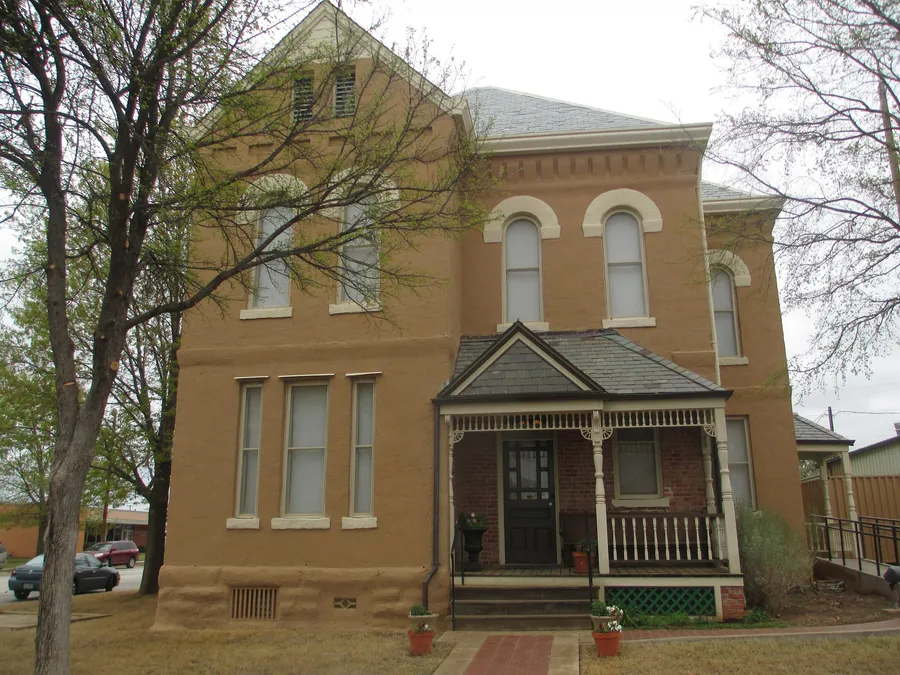
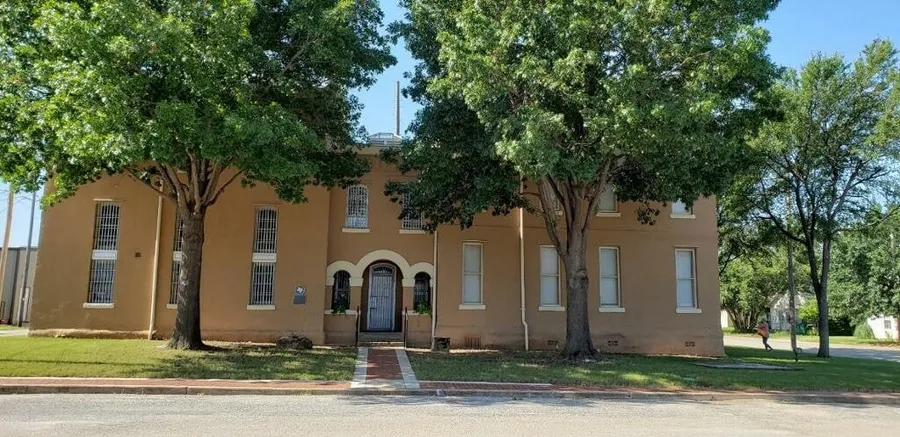
The county’s third jail, built 1890 · stuccoed 1929 · a Recorded Texas Historic Landmark
Photos: Billy Hathorn (CC BY-SA 3.0) · Clay County Historical Society
One Building, Two Worlds
Step through the front door and you’re in a family home — an elegant staircase, a parlor, bedrooms upstairs. Step through the booking chamber and everything changes: riveted iron, lever-thrown doors, and the corridor where deputies walked their rounds. Sheriffs’ wives cooked the prisoners’ meals in the kitchen next door, and the county reimbursed them for the groceries.
That closeness — justice and daily life under one roof — is what the museum preserves. Nearly everything inside was donated by Clay County families, and the volunteers who greet you often know the stories firsthand.
Inside the Jail
Walk the iron cages that held Clay County’s prisoners for 83 years — a first-floor drunk tank, six cells upstairs for longer stays, and doors still worked by mechanical levers.
See more about The CellsThe other half of the building was home: a Victorian parlor, a kitchen built around a cast-iron range, and upstairs bedrooms — where a lawman’s family lived a wall away from the lockup.
See more about The Sheriff’s QuartersBuilt into the jail in 1890 and never used — not once in 83 years. The museum’s most talked-about feature is a monument to the hangings that didn’t happen.
See more about The GallowsCell by cell, the jail now holds Clay County’s memory: pioneer and Native American collections, farm-and-ranch history, and keepsakes donated by county families.
See more about Heritage ExhibitsA Clay County Legend
As Clay County tells it, Sheriff George Cooper Wright once stood off a lynch mob at this jail with a Winchester in his hands — determined that if any man hanged here, it would be the law that did it, not a rope in the dark. The gallows upstairs never did get used.
Read the StoriesFrom the Archives
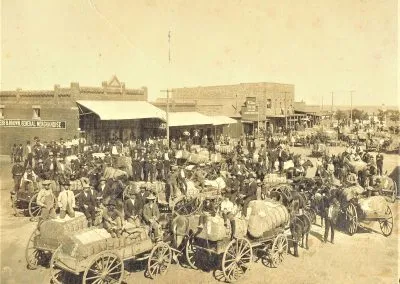
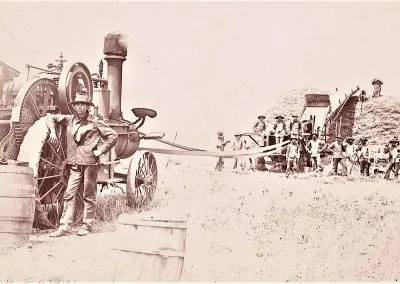
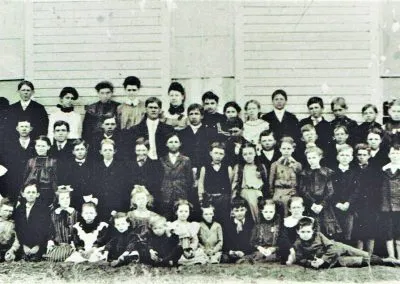
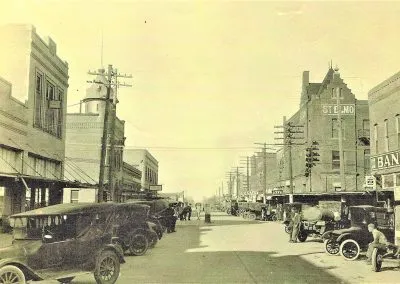
Threshing crews and cotton wagons, country schools and concert bands, Bridge Street before the pavement — the Historical Society’s photo archive holds a county’s worth of everyday history. A selection is online here.
A Recorded Texas Historic Landmark
The jail stands at 116 N. Graham St., one block west of Clay County’s domed 1884 courthouse — twenty miles southeast of Wichita Falls where U.S. 287 meets U.S. 82. Come for the jail; stay for the courthouse square, and if it’s the third weekend of September, the Clay County Pioneer Reunion & Rodeo — a county tradition since 1932.
Plan a Visit
116 N. Graham St., Henrietta, Texas — one block off the courthouse square. Admission is free; donations keep the iron doors swinging.