Western Heritage
Tex Rickard, the Henrietta city marshal who went on to build the new Madison Square Garden; Comanche leader Quanah Parker; and guests of the St. Elmo Hotel, Governor “Big Jim” Hogg among them.
Inside the Museum
The building splits down the middle, and the split is the story: a Victorian family home on one side, cold steel on the other. Nearly everything you'll see was donated by Clay County families.
The Residence Wing
Sheriffs and jailers lived here with their families for 83 years, and the restored quarters keep the era’s comforts in place. The parlor holds a pump organ and a 1912 Victrola; the living room, a firearms collection, a painting of Henrietta’s St. Elmo Hotel, and a display on the county’s brush with Bonnie and Clyde — Clyde Barrow’s sister lived in Henrietta, and the pair kept a hideout in southern Clay County.
The kitchen is built around a Majestic cast-iron range — the very sort on which lawmen’s wives cooked the prisoners’ meals, with the county picking up the grocery bill. Upstairs, three bedrooms display period clothing, spinning wheels, sewing machines, children’s toys, and gowns worn by Clay County Pioneer Reunion queens.
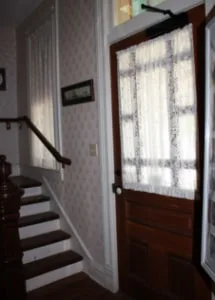
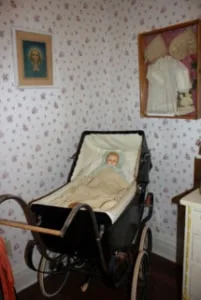
Snapshots from the Society’s earlier website — small, but they show the house as it’s kept.
The Jail Wing
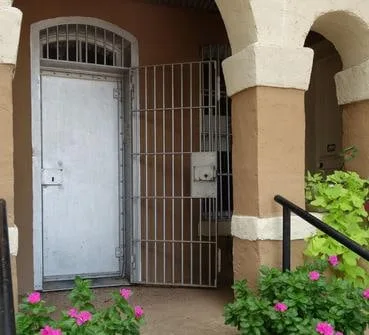
Cross the central booking chamber and the wallpaper gives way to riveted steel. This side is preserved as the working county lockup it was until 1973.
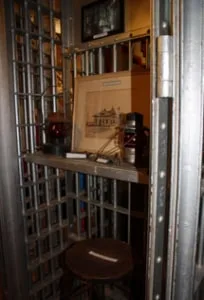
A first-floor holding cell for the overnight guests of Saturday nights past.
The second-floor block held longer-term prisoners behind riveted steel, with doors thrown by mechanical levers that still work the way Pauly built them.
Four cells above the booking chamber were kept apart from the main block for women and children.
A corridor between the cells and the outer walls gave prisoners exercise and deputies a patrol route. Today it’s lined with the names of Clay County’s communities — Bluegrove, Byers, Petrolia, Vashti, Charlie, Cambridge, and more.
Built into the jail in 1890 and never used. No one was ever executed here — and that absence is the museum’s most powerful exhibit.
The Heritage Center
As the jail became a museum, nearly every cell became an exhibit case. Displays include:
Tex Rickard, the Henrietta city marshal who went on to build the new Madison Square Garden; Comanche leader Quanah Parker; and guests of the St. Elmo Hotel, Governor “Big Jim” Hogg among them.
Clay County men and women in uniform — from Maj. Gen. George Akin to the Lutz brothers of the WWII Navy — alongside a Greatest Generation collection and shelves of county-veteran binders.
In the basement: a rope bed, a carved bread bowl, and the everyday tools of making do — with Native American displays that include Quanah Parker’s peace pipe.
Oxen yokes, scythes, horse collars, and pitchforks from the county’s cattle-and-cotton backbone — plus a barbed-wire collection and Olsen-Stelzer boot company memorabilia.
Medical and postal history (including a table from the Petrolia post office), early churches, and a schoolroom’s worth of letter jackets, yearbooks, and a mimeograph machine.
A prized holding: letters W.W. Carroll wrote from Clay County between 1876 and 1879 to his fiancée Anna in Missouri, describing North Texas ranch life and work for Burk Burnett.
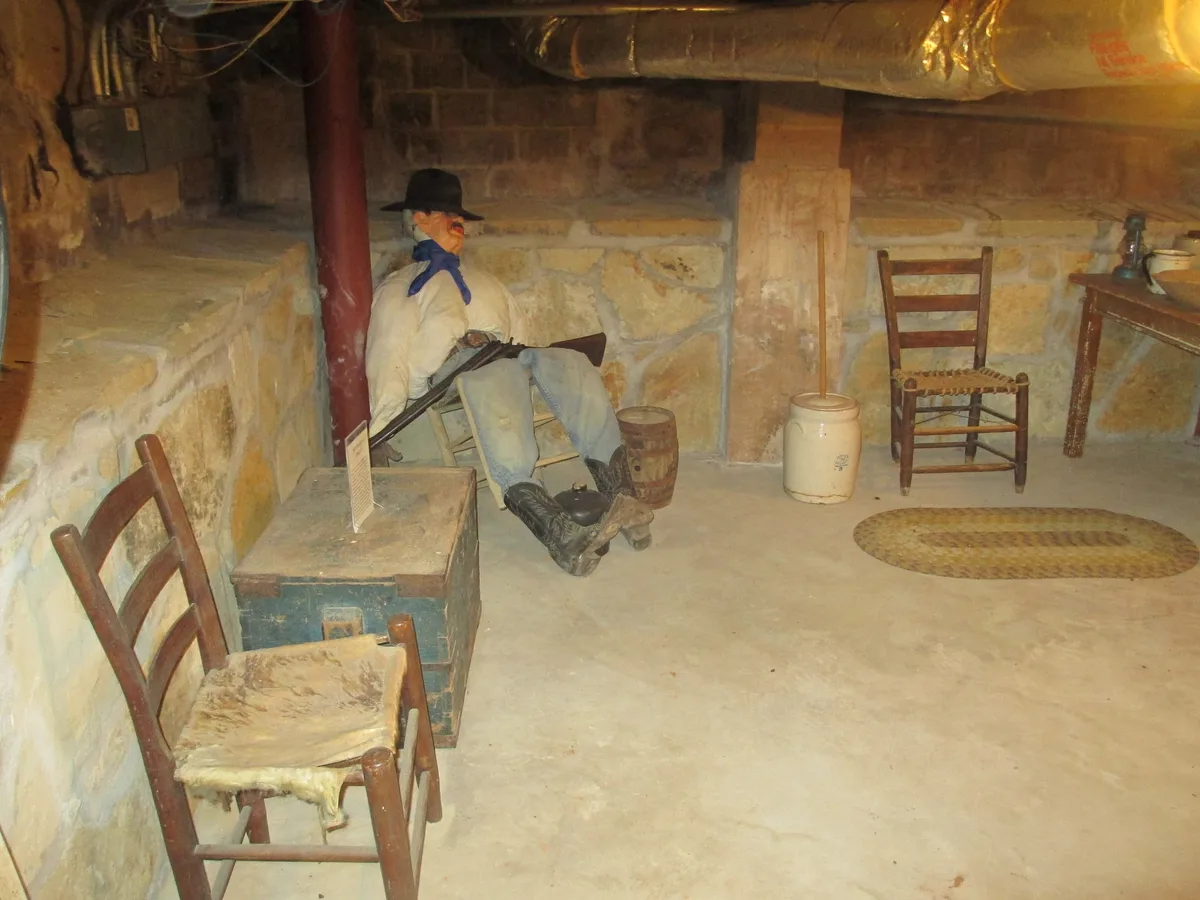
Displays are arranged by the museum’s volunteers and may move from time to time — every visit is a little different.
Plan a Visit
116 N. Graham St., Henrietta, Texas — one block off the courthouse square. Admission is free; donations keep the iron doors swinging.
