Est. 1890 · Henrietta, Texas
A Jail Built for a Boom That Never Came
Clay County's third jail was reportedly the largest in the area — built oversized, the story goes, for a federal court that went to Wichita Falls instead. What the county got was something rarer: a building that survived long enough to tell the whole story.
The Building
Pauly-Built, Made to Last
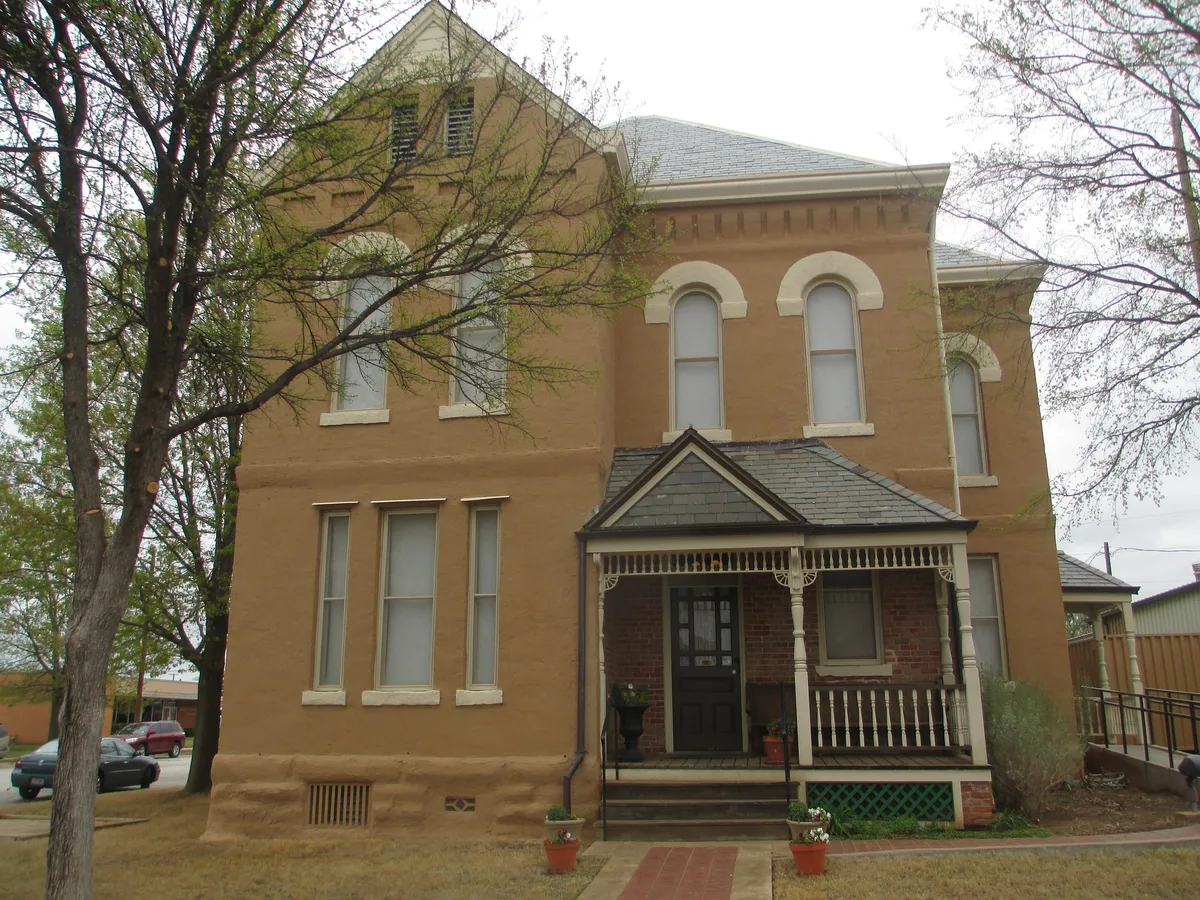
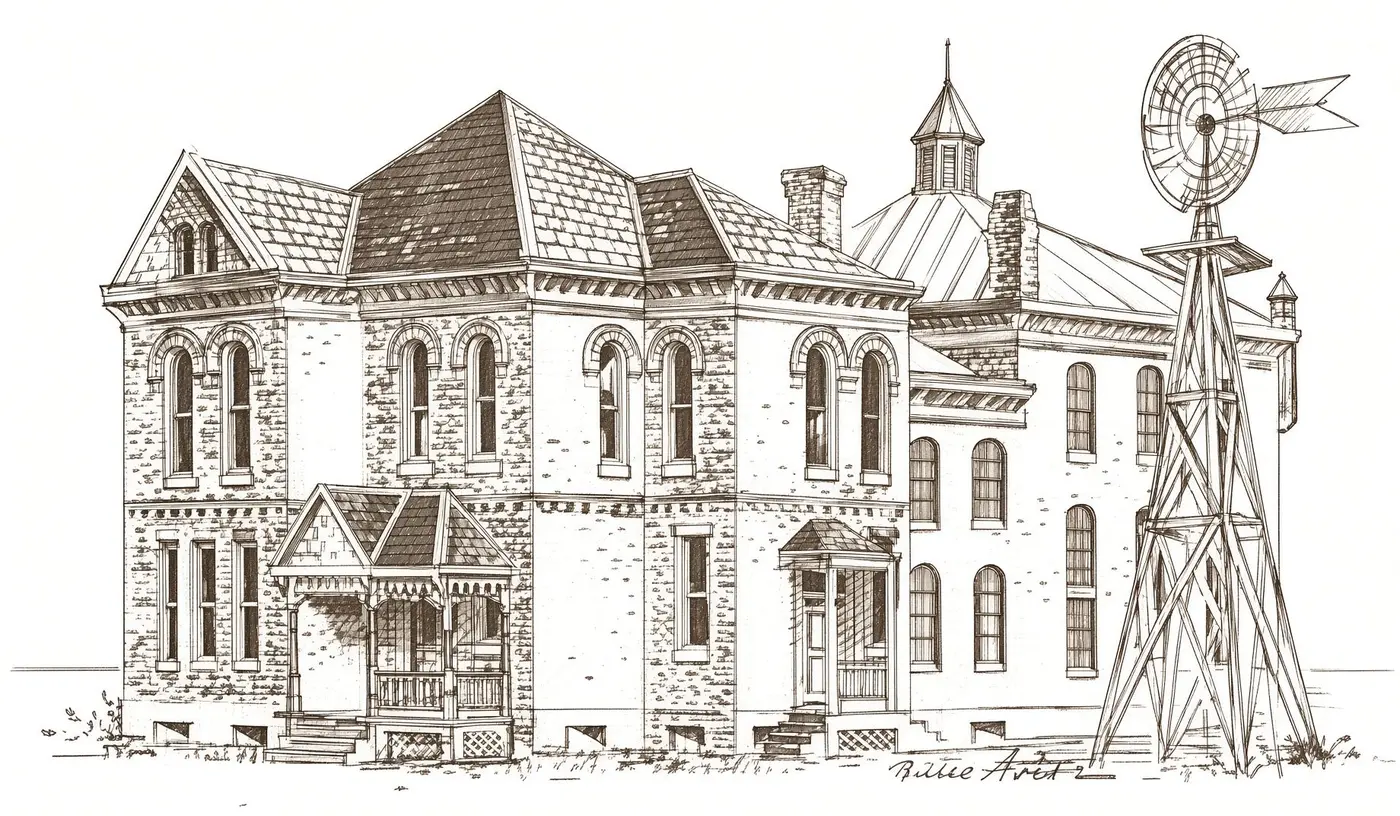
In 1890 the Pauly Jail Building and Manufacturing Company of St. Louis delivered Clay County a serious jail: two stories of masonry on a stone foundation, Roman arches over the openings of an asymmetrically gabled front section, segmental arches elsewhere, stringcourses, an ornamental brick cornice, corner finials, and a small functional cupola.
The design’s real signature was domestic. Attached living quarters — parlor, living room, kitchen, and three upstairs bedrooms — housed the sheriff or jailer and his family, separated from the cells by a central booking chamber. In 1929 the brick was stuccoed over, and that is the face the jail still shows the square today.
The building is listed on the National Register of Historic Places (1978, jointly with the courthouse) and is a Recorded Texas Historic Landmark (1986).

The Ledger
From Calaboose to Museum
1857 — Clay County is born
Created from Cooke County on Christmas Eve, 1857, and named for Kentucky statesman Henry Clay — with a first population of just 109. The county was organized in 1861, all but abandoned in 1862 when the Civil War pulled troops off the frontier, and reorganized in 1873.
1874 — The first jail: a wooden calaboose
The county’s first jail was a 16-foot-square oak “calaboose” with six-inch wooden walls — three cells to a side. An 1878 contract for a $7,000 sandstone replacement was let but, according to the National Register record, never built.
1882 — The railroad picks the winner
The Fort Worth & Denver City Railway reached Henrietta, bypassing Cambridge, the first county seat. Henrietta took the courthouse — local lore says cowhands roped the safe holding the county records and dragged it three miles home.
1884 — The courthouse rises
Clay County built its Italianate red-brick-and-sandstone courthouse on the square — a National Register property that still anchors downtown Henrietta, one block east of the jail.
1890 — The jail is built
The Pauly Jail Building and Manufacturing Company of St. Louis won a $24,000 contract and completed the county’s third jail the same year. By the accounts of the day it was built big on purpose — Henrietta expected a federal court that ultimately went to Wichita Falls instead.
1890–1973 — Eighty-three years of frontier justice
The building served as county jail and sheriff’s residence at once. Lawmen’s wives cooked the prisoners’ meals in the family kitchen and were reimbursed by the county. The gallows built into the jail was never used — no one was ever executed here.
1929 — A new face of stucco
The brick exterior was stuccoed over — the look the building still wears today.
1973 — The last prisoner leaves
A new jail facility replaced the 1890 building and its official use was discontinued after 83 years. The Clay County Historical Society took possession in the mid-1970s.
1978 — On the National Register
On October 3, 1978, the jail was listed on the National Register of Historic Places jointly with the 1884 courthouse, as the “Clay County Courthouse and Jail.”
1985–86 — The rescue begins
After years of deterioration, the Historical Society began restoring the dilapidated jail in 1985. In 1986 the building was designated a Recorded Texas Historic Landmark.
1997 — The museum opens
The still-unrestored jail did duty as a community haunted house in the early 1990s — then a capital campaign, a quarter-million dollars by the Society’s own account, funded the full restoration, and the museum–heritage center opened in June 1997. Billie Mae Avis, the local artist who championed the museum for decades and stored its first artifacts in her own home, died shortly before the doors opened.
2008–2012 — Growing into a heritage center
A second campaign — some three-quarters of a million dollars, per the Society — renovated the basement and reinforced the structure. In 2012 the museum expanded into the adjacent former fire-department buildings, now home to wagons and farm equipment.
Places on the Map
The Town the Jail Was Built to Serve
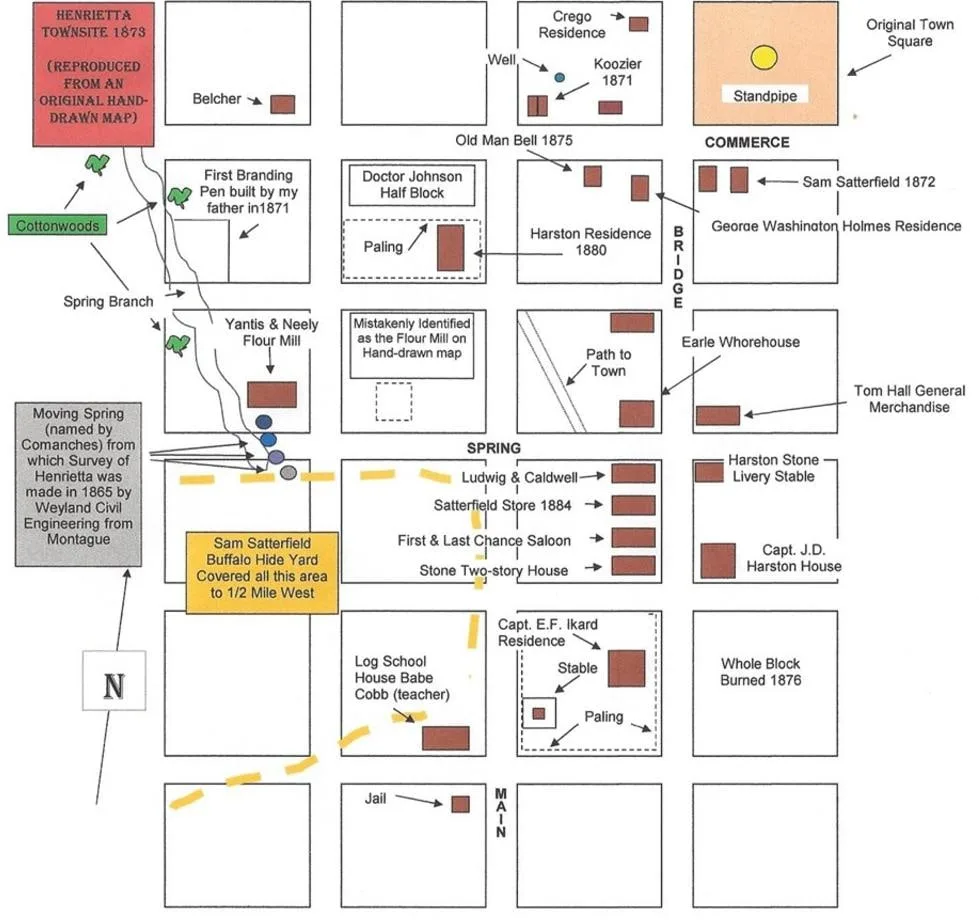
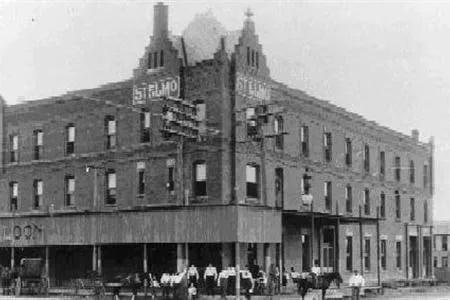
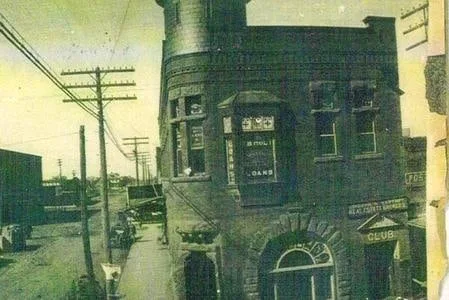
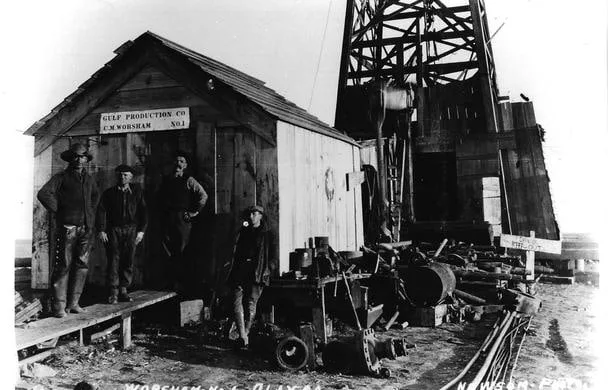
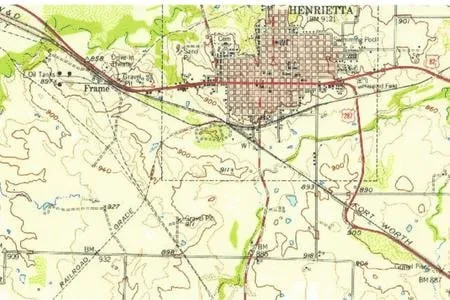
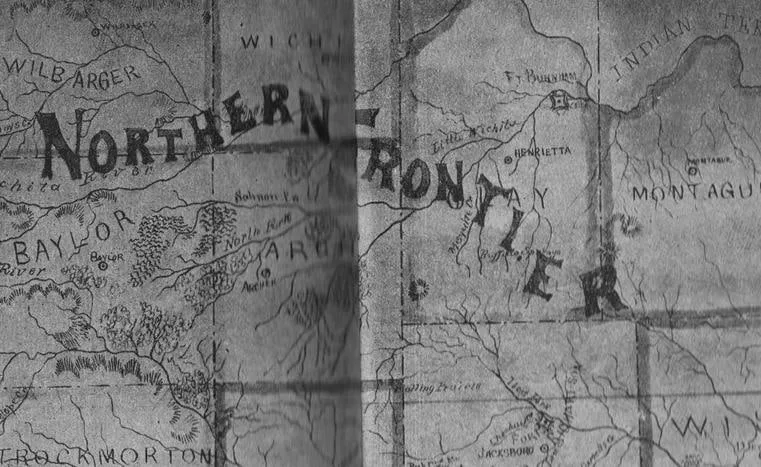
The Historical Society’s researchers have written up the places around the jail — the courthouse a block east, the hotel that was Henrietta’s civic center, the field that put Petrolia on the map. The pictures and maps here come from that work.
The County Around It
Cattle Country, Through and Through
Clay County’s story is pure Texas frontier. Early settlers ran cattle; Henrietta was a buffalo-hunting center — in 1883 eleven boxcars of buffalo bones were shipped east for fertilizer — and a state historical marker credits county rancher William S. Ikard with bringing the first Hereford cattle to Texas in 1875. Fittingly, the jail stands on Graham Street at the corner of Ikard.
For a stretch of the 1870s, per the Texas State Historical Association, this small courthouse town served as the judicial center of the whole Texas Panhandle. Even the town’s name is a genuine mystery: possibly a feminized “Henry” for Henry Clay, possibly a nod to his wife Lucretia — the TSHA says nobody knows for sure.
Plan a Visit
Stand Where the Story Happened
116 N. Graham St., Henrietta, Texas — one block off the courthouse square. Admission is free; donations keep the iron doors swinging.
- Hours
- Thursday & Friday: 10 a.m. – 2 p.m.Hours can change — call (940) 538-5655 to confirm before you drive out.
- Admission
- Free · donations welcome